
Choosing the Right Dentist in Pompano Beach: Expertise and Experience Matter

When selecting a dentist in Pompano Beach, it’s crucial to consider the professional’s level of expertise and accumulated experience. These factors tell the quality of care you can expect to receive. Dentists with extensive experience will likely encounter a wide range of dental issues, so they should have the practical knowledge to handle complex cases confidently. Moreover, dental professionals who prioritize staying abreast of the latest advancements in dental science can offer patients the most up-to-date treatments and technologies, often resulting in better care outcomes. By carefully evaluating these aspects, individuals in Pompano Beach can make an informed decision when choosing their dental caregiver. Is there a significance to the dentist’s length of practice in Pompano Beach for ensuring a localized experience? A dentist’s tenure in Pompano Beach contributes significantly to ensuring a localized experience for patients. A dentist who has served the community for many years understands the general dental needs of the populace and is familiar with common local oral health trends. Such insights allow for a more personalized approach to dental care. Long-standing practice in the area can also mean building trust with the community, which is crucial for patient comfort and satisfaction, ensuring that residents who are anxious about dental visits feel at ease with a well-known local practitioner. Additionally, dentists with extensive practice history in Pompano Beach are likely to have established a robust network with other local health professionals and services. This can tremendously facilitate a multidisciplinary approach to oral health, where your dentist can collaborate quickly with specialists if a complex dental condition is detected. This seamless coordination ensures comprehensive care, encompassing not just the dental aspects but also considering the overall well-being of the patient, which often reflects the region’s unique lifestyle and environmental factors. How can Pompano Beach patient review show a dentist’s knowledge and capacity to treat various dental cases? Patient reviews can offer valuable insights into a dentist’s knowledge and capacity to treat various dental cases, particularly in Pompano Beach or any other location. Here’s how reviews can reflect a dentist’s expertise and capabilities: When reading reviews, it’s essential to look for patterns and consider the context of each review. While only some reviews may provide a complete picture, they can collectively offer a glimpse into a dentist’s competence, approach to patient care, and ability to treat various dental conditions successfully. For more guidance, you may also find Choosing a Dentist: Key Factors to Consider for the Best Care helpful. What evidence of a dentist’s commitment to continuing education and advancement could be helpful for Pompano Beach consumers seeking specialist dental treatments? For Pompano Beach consumers seeking specialist dental treatments, evidence of a dentist’s commitment to continuing education and advancement is crucial for ensuring high-quality care. Useful indicators include: These elements reflect a dentist’s dedication to professional growth and ability to provide patients with contemporary, evidence-based treatments. Patients exploring treatment options may also benefit from learning more about general dentistry services and what comprehensive care can include. How do Pompano Beach dental associations or societies boost a dentist’s credibility and ability to use modern techniques? In Pompano Beach, dental associations play a pivotal role in enhancing a dentist’s credibility and proficiency in modern techniques. These professional alliances create a supportive network that fosters continuous learning and skill advancement, bolstering a dentist’s expertise. By being part of these associations, dentists gain access to cutting-edge advancements, workshops, and collaborative platforms, allowing them to stay abreast of the latest technologies and techniques. Additionally, the affiliation signals a commitment to excellence and adherence to industry standards, instilling confidence in patients. Pompano Beach dental associations not only elevate individual dentists but also contribute to the overall advancement of dental care in the community, ensuring residents receive the highest quality, modern, and innovative dental treatments. If you’re preparing for your first consultation, what to expect during your first visit to a cosmetic dentist can provide added insight. Trust Your Expert Dentist in Pompano Beach! When choosing your expert dentist in Pompano Beach, Dr. Jaline Boccuzzi Dentistry will guide you towards optimal oral health and stellar smiles. Our practice is grounded in commitment, skill, and compassion, offering tailored dental care that integrates state-of-the-art technology through personalized dental exam and treatment planning. Join us and experience dental excellence that shines in every smile we care for. Call us today or request an appointment!
Impacted Teeth Extraction: A Common Dental Procedure

Have you recently been told by your dentist that your impacted teeth need to be extracted? While it may sound like a daunting task, impacted teeth extraction is one of the most common dental procedures performed today. The process may seem intimidating, but understanding what to expect during an extraction can help make the experience much less stressful. Keep reading as we walk you through why extractions are sometimes necessary, what happens during the procedure itself and ways to help with the healing process post-extraction. What Are Impacted Teeth? Impacted teeth are teeth that do not emerge through the gumline as they should. This condition typically occurs when there isn’t enough space in the mouth for the tooth to grow naturally. Wisdom teeth, also known as third molars, are the most commonly impacted teeth, but other teeth can also be affected. Impacted teeth extraction is a dental procedure that frequently addresses teeth that fail to emerge properly through the gum line. While wisdom teeth are commonly associated with impaction, this condition can also affect other teeth in the mouth. The procedure is essential to prevent potential complications and maintain overall oral health. Impacted teeth extraction is a routine yet crucial dental procedure, preventing potential issues such as infection, pain, damage to adjacent teeth, and more. It is vital in ensuring the patient’s oral health and overall well-being. Types of Impactions: Soft Tissue Impaction: In this case, the tooth has partially emerged through the gum but cannot erupt fully. Partial Bony Impaction: The tooth has partly erupted but remains partially encased in the jawbone. Complete Bony Impaction: The tooth is entirely encased within the jawbone and cannot blast through the gumline. How Is Impacted Tooth Extraction Done? Impacted tooth extraction is a dental procedure to remove teeth that have not emerged properly through the gum line. Here is a step-by-step explanation of how impacted tooth extraction is typically done: Evaluation: The process begins with a thorough dental examination, often including X-rays. This evaluation helps the dentist determine the tooth’s position, angle of impaction, and its relation to surrounding structures like nerves or adjacent teeth. Anesthesia: Local anesthesia is commonly administered to ensure the patient’s comfort during the procedure. To a certain extent, particularly in the case of sophisticated extractions or when multiple teeth are involved, general anesthesia or conscious sedation may be used. Gum Incision: If the impacted tooth is partially or completely encased in the gum or jawbone, a small incision is made in the gum tissue to access the tooth’s location. Tooth Extraction: With the impacted tooth exposed, the dentist carefully removes it. Depending on the tooth’s position and level of impaction, the extraction may involve sectioning the tooth into smaller pieces to facilitate removal, particularly for molars deeply embedded in the jawbone. Suturing: The gum tissue is sutured or stitched closed after tooth extraction. Sutures help promote proper healing and minimize bleeding. Recovery: The patient is closely monitored as they recover from the effects of anesthesia. Detailed post-operative instructions are provided, typically guidelines for managing discomfort or swelling and education on diet and oral hygiene. A skilled dentist or oral surgeon conducts the entire impacted tooth extraction procedure with precision and care. Patients are encouraged to follow post-operative careful directions, essential for a speedy and trouble-free recovery. Is Impacted Tooth Removal Painful? The perception of pain during impacted tooth extraction varies from person to person and depends on several factors, including the tooth’s position and the complexity of the procedure. However, most patients experience minimal discomfort during the extraction itself due to the effects of anesthesia. After the procedure, some pain and swelling are typical, but these can be managed with prescribed or over-the-counter pain relievers. It’s essential to follow post-operative care advice from your dentist to reduce pain and speed healing. Can Impacted Teeth Cause Other Issues? Impacted teeth can cause several problems if untreated dental and oral health problems. Some potential issues include: Infection: Impacted teeth can trap food particles and debris, increasing the risk of disease in the surrounding gums and tissues. Pain and Discomfort: Impacted teeth often cause pain, swelling, and discomfort, impacting a person’s quality of life. Damage to Adjacent Teeth: Impacted teeth can push against neighboring teeth, causing misalignment or damage. Cysts or Tumors: In rare cases, impacted teeth can develop cysts or tumors within the jawbone. Gum Disease: Difficulty in cleaning around impacted teeth can result in gum disease, leading to more severe oral health issues. Sinus Problems: Impacted upper wisdom teeth can press against the sinuses, leading to sinus pain and congestion. Given these potential complications, it’s advisable to address impacted teeth promptly through extraction or other appropriate treatments. What’s the Recovery Process After Extraction? The recovery process after impacted tooth extraction typically follows a set timeline: Immediate Post-Procedure: Patients may experience some bleeding, swelling, and mild discomfort immediately after the procedure. Applying ice packs and taking prescribed or over-the-counter pain relievers as directed can help manage these symptoms. First Few Days: Swelling and discomfort usually occur within the initial forty-eight hours and then progressively diminish. Following a soft diet and avoiding strenuous activities during this period is essential. Stitches Removal: If sutures were used, the dentist typically removes them about one week after the procedure. Complete Healing: Full recovery can take several weeks, with the gum tissue gradually healing and any residual discomfort diminishing over time. Follow-Up Appointments: Patients should attend made follow-up appointments to ensure that the patient is healing appropriately and to address any issues or difficulties that may come up. It’s crucial to adhere to post-operative care instructions provided by your dentist to promote a smooth and complication-free recovery. Seek Professional Dental Care for Impacted Teeth! Impacted tooth extraction is a common dental procedure to address teeth that have not emerged properly. At Jaline Boccuzzi, DMD, PA // JBDentistry is dedicated to providing safe and effective impacted tooth extraction services. By understanding the process, potential discomfort, associated issues, and the recovery journey, patients
Combined Root Canal & Gum Problems
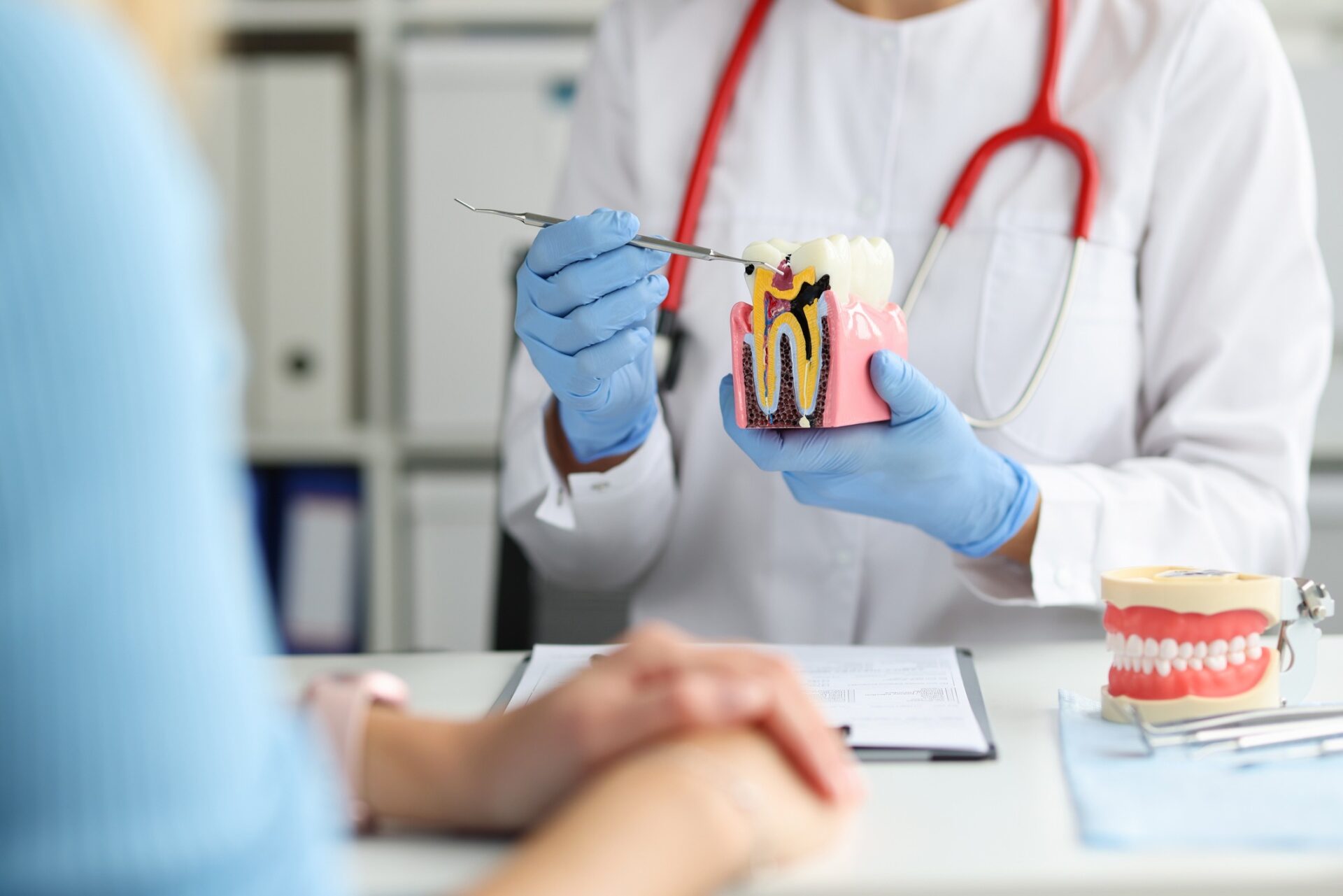
When you experience pain in your mouth, it’s sometimes abundantly clear which tooth is causing it. At other times, the sensation of discomfort is more diffuse, generalized or hard to pinpoint. On occasion, it can even be challenging to determine exactly what problem or combination of problems is causing the symptoms you’re experiencing. This may be the case when an infection exists in the root canals of a tooth as well as the gum tissue adjacent to it. In this situation, the infection may have begun in the pulp of the tooth itself; or, it may have started in the gums. Over time, it has spread from one location to the other — and now it’s causing a confusing set of symptoms that are difficult to sort out. Regardless of where the problem started, a thorough analysis will be necessary before treatment can begin, to give you the best chance of saving the tooth. Confusing Symptoms From time to time, many people experience oral discomfort that’s dull or intermittent. Occasionally, a more insistent pain may be triggered by a stimulus like temperature (from hot or cold foods or beverages) or pressure (from biting down on something). Sometimes, it may feel as though the ache is coming from a group of teeth rather than one single tooth — or even from the sinus area above the back teeth. These symptoms can indicate a number of dental issues, including root canal and gum problems, and shouldn’t be disregarded. However, if you manage to ignore the acute pain, in many cases it will fade in time. But this isn’t good news: It generally means that the infected tissue in the pulp of your tooth has died, and the nerve is no longer functioning. That’s when the problem may become more serious. Chicken or Egg? When the pulp tissue inside your tooth becomes severely infected, it’s possible for the disease to move through openings at the end (apex) of the root, and outside of the tooth. It can then spread to the periodontal ligament, which anchors the tooth to the surrounding bone and gum tissue. From there, the infection may extend to the gum tissue and cause periodontal disease, or even result in a painful gum abscess. At that point, you may have pain — even severe pain that will let you know exactly which tooth is affected. But it’s also possible for the infection to be spread by the exact opposite pathway. In this case, an infection that originated in the gums (commonly due to periodontal disease caused by a buildup of plaque) may have traveled through small passageways called accessory canals, which are located in between a tooth’s roots, or on the sides of the roots. The infection can then extend into the tooth’s pulp. If your teeth are fractured, it’s even easier for disease to spread. Treatment Methods When dental problems involve both root canals and gum disease, saving the affected tooth can prove challenging. This is when it matters where the infection started: If it’s primarily a root-canal problem that later moved into the gums, the outlook for the tooth is reasonably positive if it receives immediate treatment. If gum disease came first, however, the prospects often aren’t as good; by the time the infection has moved into the tooth, it’s possible that much bone has already been lost, making the tooth’s long-term prognosis poor. In either case, the cause of the tooth pain will need to be diagnosed and an effective treatment plan developed. The sooner that happens, the better: Root canal and gum problems simply don’t get better on their own.