
Cleft Lip and Palate
A cleft lip and cleft palate are common birth defects that occur in the very early stages of fetal development. A cleft lip is the separation of the two sides of your child’s upper lip, appearing as a narrow or wide opening that can extend to the roof of the mouth. A cleft palate is a split or opening in the roof of your child’s mouth. These abnormalities can occur separately or together and can vary in severity. Surgery is the only way to repair a cleft lip or cleft palate. Problems Associated with Cleft Lip and Palate Cleft lip and palate repair does a lot more for your child than cosmetically correcting their appearance. Surgery helps restore proper function to your child’s lips and mouth. Cleft lips and palates are also associated with health and developmental problems such as hearing loss, dental issues, and speech issues. With cleft lip and palate surgery, your child will be able to eat, drink, breathe, hear, and speak normally as they develop. Cleft Lip Surgery Cleft lip surgery is recommended between three and six months of age. Once your baby is under general anesthesia for the procedure, the surgeon will begin by making incisions on either side of the cleft lip to create flaps of skin. These two pieces are drawn together to close the gap of the birth defect and then sewn together with dissolvable stitches. Cleft lip surgery typically takes less than two hours. Your baby will spend the night in the hospital to make sure that they have tolerated surgery well. Cleft Palate Surgery Cleft palate surgery is usually performed when your child is around 12 months old. General anesthesia is used again for this type of procedure. Once your child has fallen asleep, the surgeon will make incisions on either side of the palate, loosening layers of tissue so that they can be stretched over the separation. When the tissue is placed where it needs to be, dissolvable stitches will be used to hold everything in place. Cleft palate surgery takes between two and three hours, though longer depending on the type and severity of the cleft palate. A second surgery in the future may be required to fully repair a cleft palate. Your child will fully recover from cleft lip or palate repair in about four weeks. Due to the complexity of cleft palate surgery, recovery may take a little longer.
Cleft Lip & Palate Repair

Cleft lip and cleft palate are among the most common birth defects, estimated to affect around one in 700-800 babies born in North America. Both problems result from the incomplete formation of anatomical structures (the lips and the palate, or “roof of the mouth”) which develop during early pregnancy. These conditions may occur separately or together, and they can have a wide variation in severity. With proper treatment, however, in most cases, the child has an excellent chance of leading a healthy, normal life. Besides the noticeable irregularity in appearance, a cleft lip or palate can cause difficulties with feeding and speech. Both conditions are also associated with ear infections, hearing loss, and dental problems. To fully address these problems, a child may require several surgical procedures, performed at different times. That’s why a team approach is often used to treat this complex condition. Members of the medical team may include an oral surgeon, a pediatric dentist, an orthodontist, a plastic surgeon, and other specialists. In general, the first goal of treatment is to repair or “close” the gap in the lip and/or palate as soon as it is practical for the child — as early as 2 to 9 months of age. Follow-up treatment may be needed to restore the appropriate form and function of the lips, teeth, and jaws (for proper speech, eating, etc) and to correct hearing problems. These procedures may include plastic surgery, orthodontics, orthognathic (jaw) surgery, and speech therapy. Surgical Treatment for Cleft Lip or Palate Cleft lip or palate surgery is usually performed in a hospital setting, and may be done when an infant is 6 to 12 weeks old. Intravenous sedation or general anesthesia is used, so your child won’t experience any pain. In cleft lip surgery, an incision is typically made on each side of the cleft. This creates several “flaps” of tissue, which are then sutured (stitched) together to close the gap. Suture lines are generally planned to follow the facial contours so that the surgical scar will be as unobtrusive as possible. Cleft palate treatment involves rebuilding the roof of the mouth, including soft tissue, muscle, and bone. The initial surgery is often performed between the ages of 6 and 18 months. Like cleft lip surgery, it relies on specialized “flap” techniques to reposition soft tissues and close the gap. Before or after surgery, your child may need to wear a special appliance such as an obdurator (artificial palate) or a nasal alveolar molding device (NAM), a type of retainer. Follow-Up Treatment Depending on how complex the child’s condition is, additional procedures may be required after the initial treatment to fully correct any defects. A child’s treatment plan will often include pediatric dental examinations beginning around age one. Bone grafts to repair the hard palate may be recommended at age 8-11 years when the cuspid teeth are developing. To correct problems with the alignment of teeth, orthodontic care may be needed beginning around age 12. In some situations, orthognathic surgery is recommended to address more severe jaw problems. Handling a child’s cleft lip or palate can be a challenge for caregivers and family members — but it’s important to keep in mind that this relatively common birth defect can be successfully treated. Many who have this condition have gone on to become well-known performers, politicians, and sports stars… as well as moms and dads, friends, and neighbors.
Bone Grafting

Do you think of bone as a hard, rigid material that never changes? In fact bone remodels itself all the time: Your body is constantly depositing new bone cells and removing old ones. In the case of the bone that supports your teeth, this process can be helpful or harmful. For example, the jawbone’s adaptability allows an orthodontist to move teeth into a better position with braces. But in the case of losing a tooth as an adult, the bone changes that result can have serious consequences. When teeth are lost, the bone that used to surround them begins to melt away or “resorb.” Tooth-supporting bone can also be lost when you have periodontal (gum) disease. If you lose enough teeth and bone, your facial features will sag, giving you a more aged appearance; it can also complicate treatment to replace your missing teeth. Fortunately, with modern bone grafting techniques, the bone that has been lost can be built up again. This can benefit both your health and appearance by strengthening your jawbone, allowing more effective tooth replacement, and increasing support to your facial features. Bone grafting is a minor surgical procedure that is normally done in a dental office. An incision is made in your gum to gain access to the bone beneath it, and then grafting material is added. Most often, the grafting material is processed bone minerals around which your body will actually deposit new bone cells. The grafting material itself can come from your own body, but very often it is bone from an animal or human donor that has been treated by a laboratory to make it sterile and safe. It can even be a synthetic substance. Grafting material comes in a variety of forms: powder, granules, putty or a gel that can be injected through a syringe. The graft, which is generally covered by a collagen membrane for optimum bone repair, will act as a scaffold onto which your body will build new bone. Uses for Bone Grafts Bone grafts are used in dentistry to accomplish the following treatment goals: Saving Teeth — When severe periodontal disease causes bone loss, teeth can become loose and are at risk of being lost. In order to save them, the bone around them can be regenerated through grafting; this increases bone support and helps keep them in place. Tooth Extractions — These days, it is very common to deposit bone grafting material into a tooth socket after a tooth has been removed. That way, should you want to replace your tooth with a dental implant later on, that option will be available. Dental Implants — In this optimal tooth-replacement system, a small titanium post embedded in the jawbone is attached to a highly realistic dental crown, permanently replacing the missing tooth. Implants require good bone volume and density to achieve excellent functionality and high success rates. If you have already experienced bone loss, a graft can help regenerate enough bone to place the implant successfully. What to Expect The procedure for placing a bone graft usually requires only local anesthesia, though oral or IV (intravenous) sedatives can also be used to achieve a higher state of relaxation. Since a small incision is made in your gum tissue to gain access to the bone that will receive the graft, you may experience some soreness in the area after the surgery. This can usually be managed by over-the-counter anti-inflammatory medication and/or pain relievers, as well as ice therapy after the procedure. Any discomfort should only last a day or two. Then, over the next several months, your body will replace the graft with its own bone, reversing the decline in bone quantity you have experienced.
Blood Thinners and Oral Surgery
Blood thinners are a type of medicine that prevents your blood from clotting inside a blood vessel, which can lead to a heart attack or stroke. They can also keep blood clots from forming or getting larger. They are typically used to treat certain types of heart disease, heart defects, or other medical conditions that could increase your risk of developing blood clots. A side effect of taking blood thinners is the difficulty to stop bleeding. This needs to be considered before any dental procedures take place. Always inform your dentist if you are taking a blood thinner medication, especially if you’ve just started one. It will be noted in your chart, and your cardiologist or other specialist will be consulted if you require a dental procedure with the potential for increased bleeding. Precautions Most general dental procedures, including teeth cleanings, fillings, and crowns, will not be affected if you are taking blood thinners. The only time an issue could arise is during an invasive surgery that has the potential to cause bleeding, such as a tooth extraction or gum surgery. Because the blood thinners don’t allow the blood to clot normally, stopping the bleeding during either of these procedures may be difficult. After you’ve informed your dentist about which type of blood thinner you’re taking and the exact dose, and after consulting with a specialist, your dentist may suggest temporarily stopping or reducing your medication as a precaution. Other precautions may be taken, such as using hemostatic agents during your procedure to encourage blood clotting at the operation site or being careful to suture the site to avoid hitting smaller blood vessels that can easily bleed. Returning to Normal If your medication was temporarily stopped or the dosage reduced for a dental procedure, you will be able to resume your blood thinners soon after the procedure is complete. It’s important to keep an open line of communication with your dentist, surgeon, and doctor. By all of you working together, your health will be at a much lower risk and your dental procedure will take place without complication.
Blood Thinners & Dental Procedures
Millions of people regularly take anticoagulant or antiplatelet medications (sometimes called “blood thinners”) to help prevent heart attack and stroke, and to manage a variety of medical conditions including cardiac arrhythmia and stent placement. While these drugs have proven, life-saving benefits, they can also cause side effects such as increased bleeding. So it may be a cause for concern if you’re taking one of them and you need to have a dental procedure. Anticoagulants are among the more widely used pharmaceuticals today, particularly for heart patients. Some common prescription anticoagulants include heparin, warfarin (Coumadin and generics), clopidogrel (Plavix), and dabigatran etexilate (Pradaxa). Regular aspirin and NSAIDS (like Advil) also have anticoagulant properties. The purpose of anticoagulant medications is to keep the blood from clotting (clumping together) as readily as it normally does; this reduces the chance of a clot forming inside a blood vessel, which could lead to a stroke or heart attack. If you are taking one or more of these medications, it will take longer for any type of bleeding to stop. For some dental or surgical procedures, that’s a factor that must be considered. The most important thing you should do is inform your dentist right away if you are taking any kind of anticoagulant or antiplatelet medication — especially if you have just started taking it. The name and dosage of your medication will be noted in your records, and your cardiologist (or other specialist) will be consulted if necessary, to determine what’s best for you. Having Dental Work with Blood Thinners While each patient is different, there are some generally accepted guidelines for having dental work while taking anticoagulant medications. If the drug is being taken on a temporary basis (after knee replacement, for example) then the safest choice might be to put off non-essential dental procedures. However, in many cases, it’s entirely possible to have needed work done while taking anticoagulants. In each situation, the risk of increased bleeding must be balanced against the chance that going off the medication could cause more serious problems. A number of studies have shown that for many common dental procedures — cleanings, fillings, and restorations, for example — it’s safer to continue taking anticoagulant medications than to stop, even temporarily. That’s because it is generally possible to control bleeding with local measures (such as biting down on gauze), using hemostatic devices, and minimally invasive surgical techniques. Scheduling dental work for early in the day and allowing plenty of time for rest afterward also provides an opportunity to control any bleeding that does occur. More Complex Procedures In some cases, more extensive dental procedures such as tooth extraction or implant placement may be recommended for people taking anticoagulants. As always, the potential risks and benefits of stopping the anticoagulant medication must be carefully weighed. To help in the decision-making process, one or more diagnostic blood tests, such as prothrombin time (PT) or International Normalized Ratio (INR), may be ordered. Then a judgment can be made, based on the test results and on clinical experience. While it’s extremely rare for common dental procedures to cause potentially life-threatening complications, it makes sense to take as few chances as possible. That’s why you should tell us about any medications you may be taking, including herbs and vitamins. While taking anticoagulants doesn’t prevent you from having dental work, it’s important to share information about your medications so you can get the best results from your treatment.
Air Abrasion
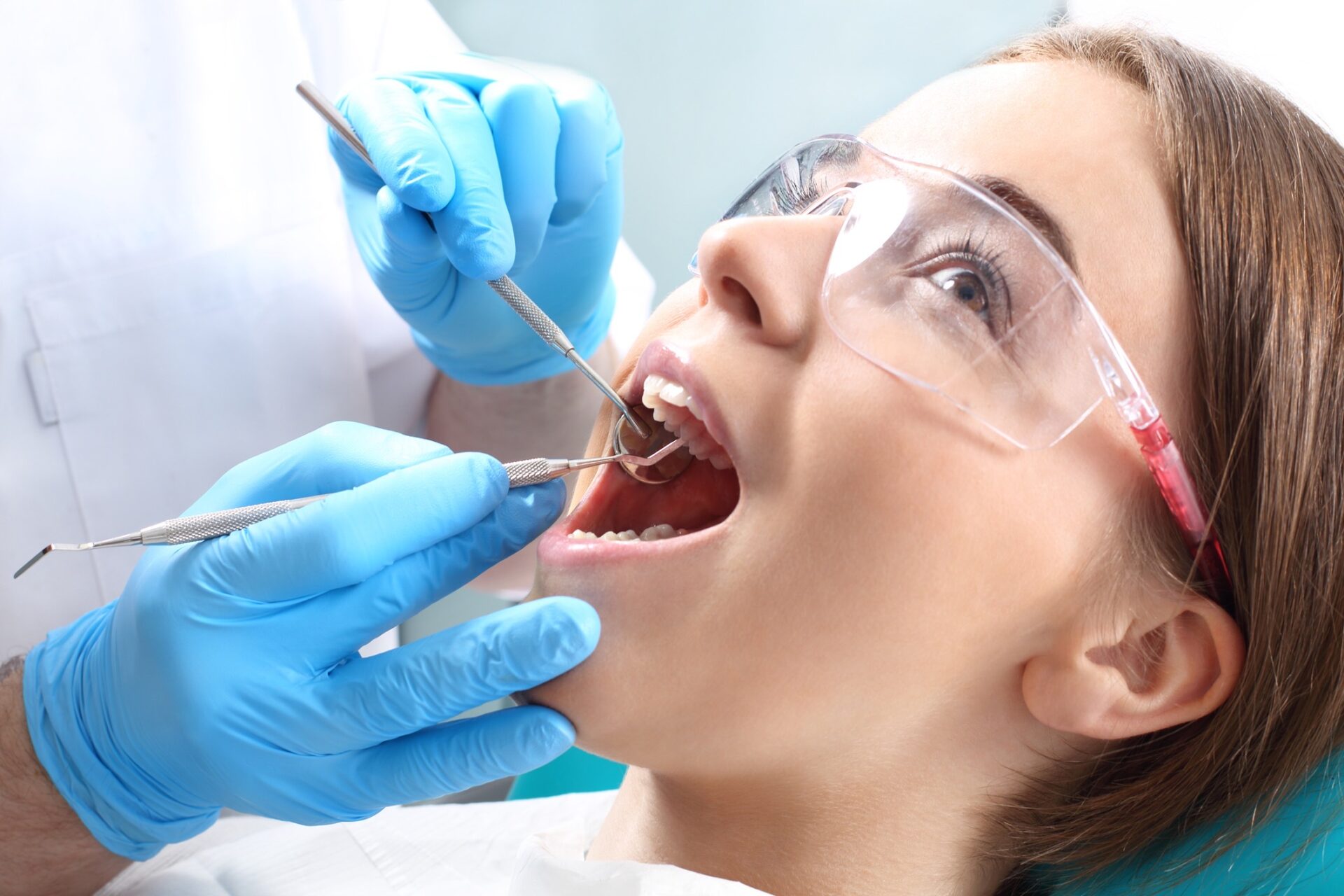
In the future, could small cavities be detected early and filled without anesthesia, and with only the minimum removal of tooth material? Will routine dental procedures be performed with patients noticing no vibration or pressure? Will the piercing whine of a dental drill be a sound that’s heard in dental offices no more? The answer may well be yes — in fact, it’s happening right now with air abrasion technology. The air abrasion instrument is a hand-held tool that dentists use for a variety of purposes. A bit like a mini-sandblaster, it uses compressed air (or another gas) to produce a fine stream of abrasive particles that can be precisely aimed. The small, high-speed particles (often silica or aluminum oxide) remove tiny bits of material in the decayed portion of the tooth; the debris is then whisked away through a suction tube. Sound futuristic? It is, but it’s not exactly new: Air abrasion instruments were first developed in the 1940’s, but recent advances in high-volume suction and improved dental restoration materials have given the process a renewed appeal. Some of the uses for air abrasion tools include: removing dental caries (cavities) and filling them with composite (tooth-colored) material; preparing teeth for bonding, veneering or other procedures; and removing stains or even repairing small defects in teeth. How It Works A fine stream of particles, such as silica, aluminum oxide, or baking soda, is directed at the stained or decayed portion of the tooth. The particles are propelled by compressed air or gas that runs through the air abrasion instrument. As this steady and powerful stream is directed at the tooth, particles of decay on its surface are blasted away. As the particles detach from the tooth, they are quickly suctioned through a tube. The tiny abrasive particles (.002” or less in diameter) remove only minute amounts of tooth structure, making a drill seem coarse by comparison. The air pressure, flow rate, nozzle diameter, and other settings on the instrument can be accurately controlled to produce the precise amount of abrasion needed. The result is a minimally-invasive method of removing decayed or unwanted tooth material. Even though powerful suction is used to remove spent abrasive and debris, it’s still necessary for everyone to wear protective eyewear as a precaution. A rubber dam (shield) is also generally used to keep abrasive particles from affecting other teeth or getting into areas of the mouth where they don’t belong. Nearby teeth and gums can also be coated with a protective resin if needed. Advantages of Air Abrasion Because it doesn’t require a whirring drill, air abrasion generates no pressure or vibration, and makes very little noise. It can eliminate the need for anesthesia, especially if the cavity isn’t deep. It reduces the chance of damaging the tooth during a procedure, and it leaves more healthy tooth material behind. This makes it ideal for children, or others who are sensitive to dental discomfort. In fact, it’s perfect for treating tiny cavities that have been detected by laser diagnosis (cavities that aren’t big enough to be seen on an X-ray), and sealing them up before they become bigger problems. Minimally-invasive procedures are where air abrasion truly shines. Because it’s a relatively fine-scale instrument, it isn’t suitable for treating deep cavities or removing old metal fillings. However, as a high-tech tool for performing many preventive and restorative dental procedures, it offers some unique benefits to both the dentist and the patient. And someday, it just might make the dental drill obsolete. There are a few advantages to using air abrasion over the traditional drilling method, such as: No heat, pressure, or vibration is generated to cause discomfort Reduces the need for anesthesia, especially if a cavity is very shallow More healthy tissue is saved with this process Reduces the risk of fracturing or chipping a tooth Air abrasion can also assist your dentist with other procedures, including: Removing old composite restorations Preparing a tooth’s surface for bonding or sealants Removing surface stains and tooth discoloration